
My Take on a Portable Solar Panel
Boating is great — the open water, the gentle sway, the freedom. But one thing I’ve learnt is that keeping your gadgets and batteries charged isn’t always as easy as it looks. With my flybridge motor cruiser, space for a permanent solar installation is tight, and spending thousands for something I’d only use occasionally felt a bit daft.
Enter the fold-out, portable solar panel. Power when I want it, without the hassle of a full install — sounded like the perfect solution.
Thinking It Through (with a Cold Beer in Hand)
So, why go for a portable solar panel instead of a permanent setup? On my flybridge motor cruiser, there just isn’t much in the way of flat surfaces to mount a panel. I did toy with the idea of adding a solar arch at the back, but once I started looking, the prices quickly climbed — around £1,500 even for a DIY version, and only going upwards from there into the silly range.
The bigger question, though, was whether I really needed solar all the time. My mooring has shore power, and with my batteries I’m usually good for two or three days. Spending thousands for the odd weekend top-up didn’t seem to make much sense.
That’s where the fold-out, portable option came in. Power when I want it, without the cost or hassle of a permanent install — seemed like the perfect answer.
Pros & Cons
| 👍 Pros | 👎 Cons |
|---|---|
| Free energy from the sun | Dependent on weather |
| Portable & easy to set up | Can be bulky to store |
| Great for topping up batteries | Not as powerful as fixed panels |
| Eco-friendly | Initial cost |
Choosing the VTOMAN VS400
After some research, I settled on the VTOMAN VS400. I picked this one because it had one of the highest outputs — up to 400W max — and at £380 (June 2025), it was reasonably priced.
Features of the VTOMAN VS400
Before I get into how it performed, here’s a quick look at what this beast comes with:
- 400W max output — plenty of juice for topping up power stations or batteries.
- Foldable design — easy to transport, though “portable” is relative!
- Kickstand — simple setup on flat surfaces, though angle adjustment is limited.
- Durable build — feels solid and weather-resistant, ready for life on a boat.
- Multiple outputs — can charge compatible devices directly or via a power station.
- Integrated handle — makes carrying it slightly less like lugging a small sun lounger.
- Interface cable — included with the unit, so you can plug straight in.
- Cable storage — cleverly integrated with the kickstand to keep things tidy.
It’s not the smallest or lightest panel out there, but it’s designed to give a decent output while still being movable — a compromise between power and portability.
Ease of Use
When delivery day came, the postman knocked on the door looking flustered and a bit sweaty, handing me the box with a face that said, “Make me carry this again and you’ll never get another parcel.” Fair enough — the box was almost the size of a 60″ TV and heavy enough that I immediately thought, “Portable?”
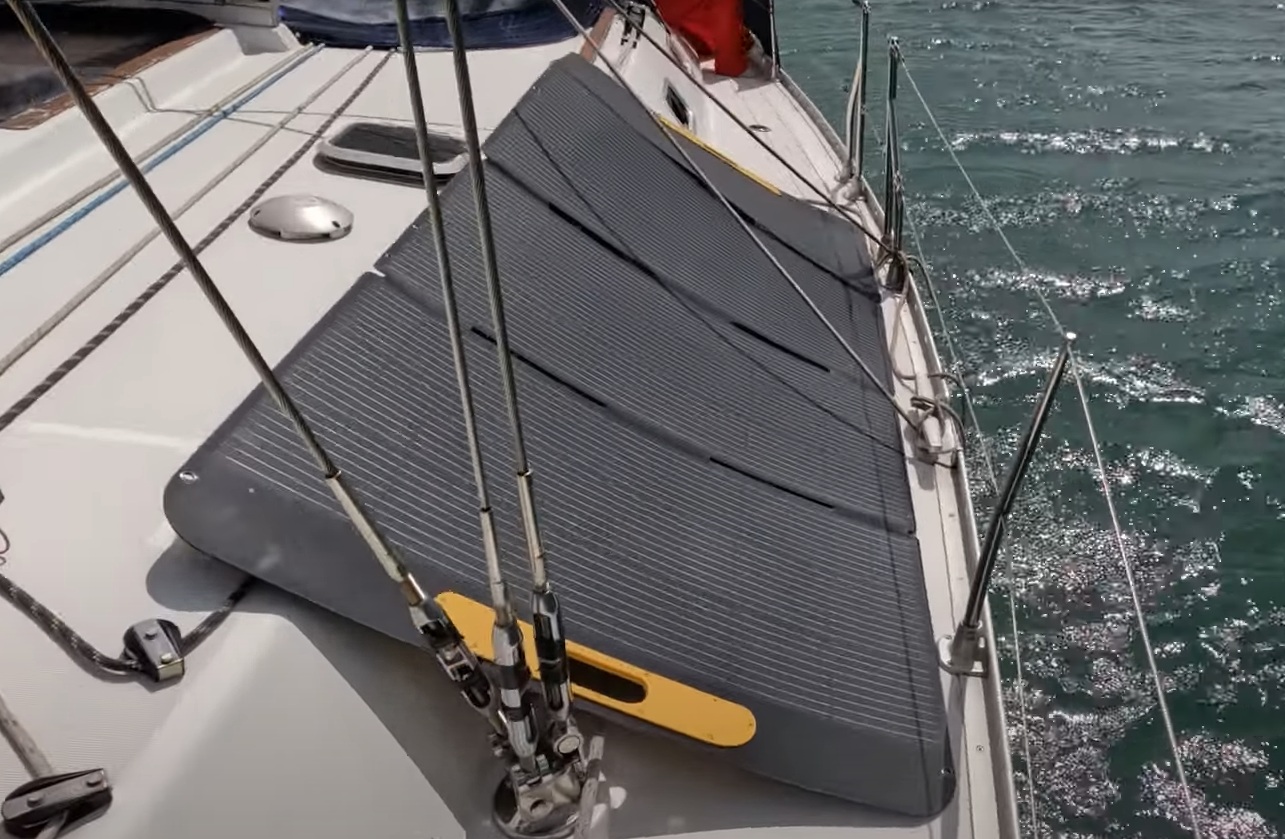
Like a child at Christmas, I tore it open. Most of the size was just packaging, and the unit itself pulled out like a massive briefcase. Still, it was substantial — standing up to my hip and weighing a fair bit, I worried it wouldn’t fit on the bow of the boat. Once on board, though, it slotted almost perfectly across the beam of the bow, leaving just enough room to squeeze past.
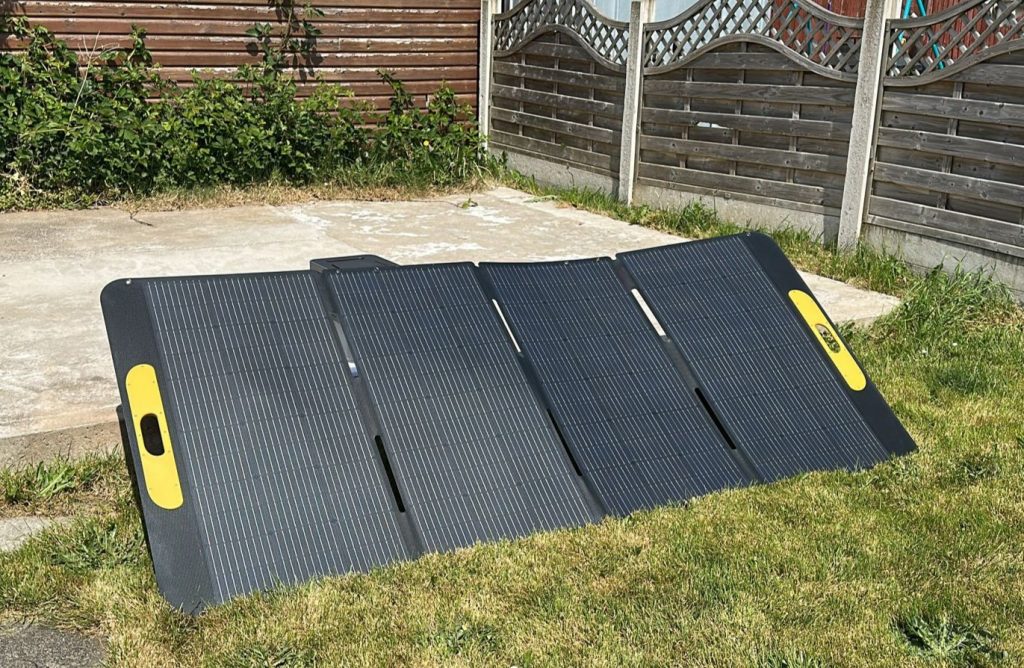
Before setting the unit up on the boat, I tried it on land first. Easy — took less than a minute or so. But setting the solar panel up on the boat? That was a whole different story. Limited space, a moving deck — it took me several minutes the first time, though I’ve improved with practice.
Testing it, I was getting 320–360W on a clear day. The tricky part was getting the angle right; the kickstand on the panels doesn’t adjust, and to maintain over 200W output, I had to move the panel every four hours. I hadn’t thought about this, but at anchor, it’s not just the sun that moves — the boat does too!
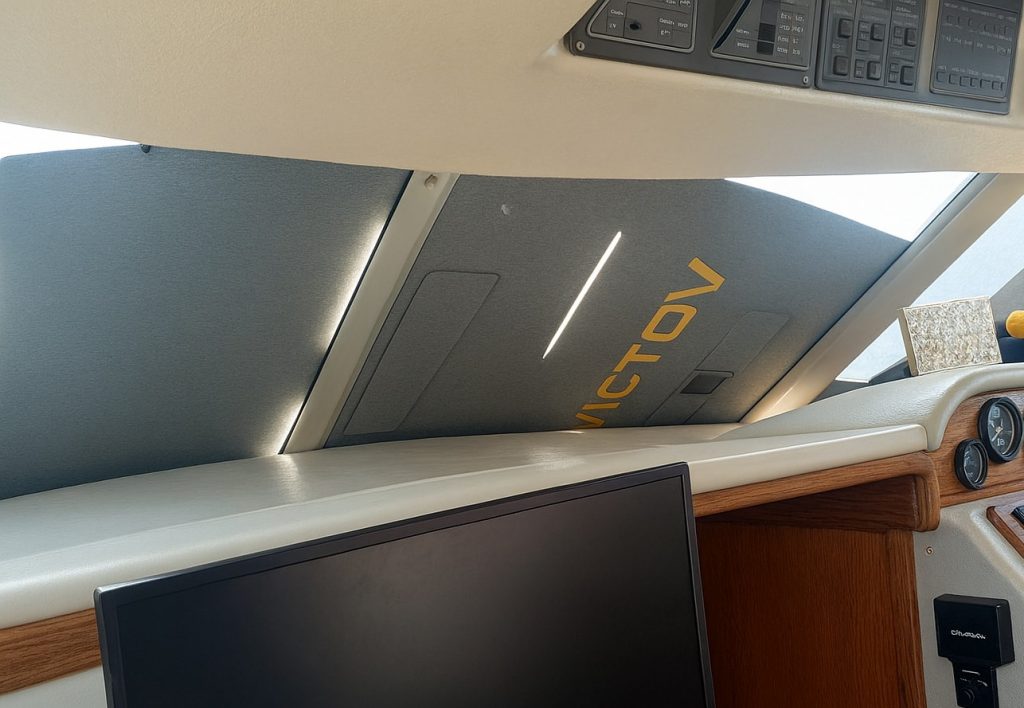
I set the panel up, went to check it after a couple of hours, and what?! Only 120W. The tide had turned, and the panels were facing the wrong way. Cue the game of “move the panels again.”
Then came the question: where to store it when I wasn’t using it? I started by leaving it on the bed, flat and out of the way — perfect, right? Well… not so much. Many complaints from my beautiful wife (plus a few trips over it in the night) meant I had to rethink.
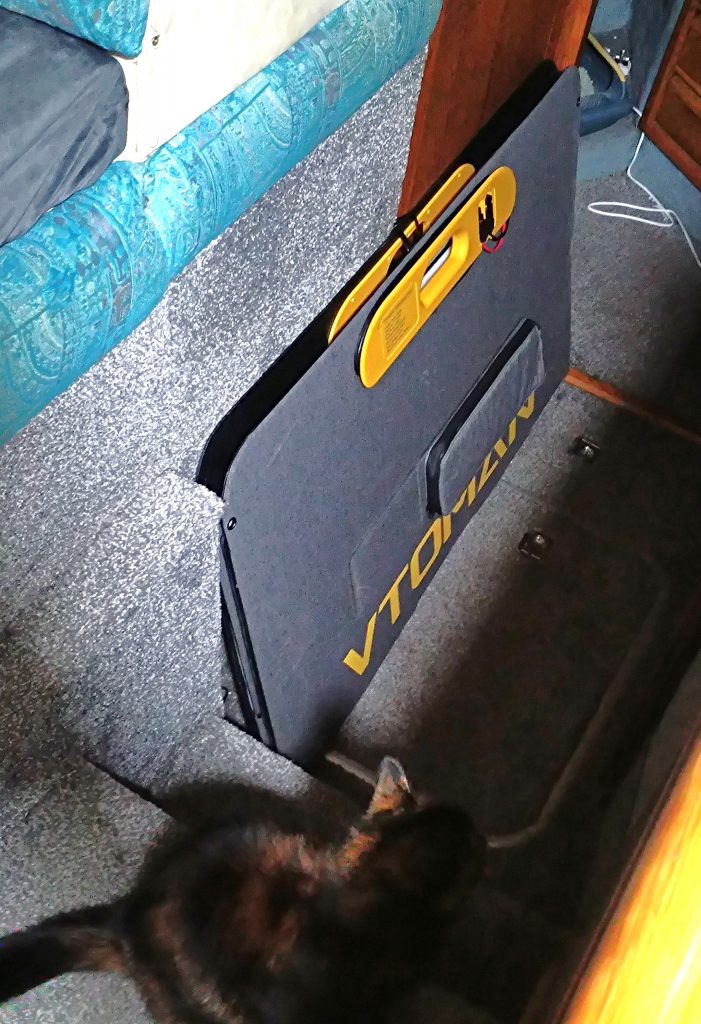
It was too long to fit easily in the hold — it would fit, but getting it in and out was a real pain. The solution came from a fellow boater: “Why don’t you slot it in the cubby behind the sofa where the dining table is stowed?” Genius. Fit like a glove, perfect.
Performance
After a few months of use, here’s what I found:
- On bright, clear days: ~320W average in the four hours between moves (slightly lower than max due to boat movement and imperfect angles).
- Cloudy days: output drops to around 180–220W.
- Heavy cloud or rain: only 50–120W, not worth putting out.
Charging my Aferiy power station from 20% to 90% in good conditions took about four hours — enough to keep me going for a full 24 hours.
Verdict
The panel does exactly what I wanted: it provides power when I need it, in sufficient quantity, and integrates nicely with my existing system. From that point of view, it’s a glowing success.
That said, if I had the space, I’d still opt for permanently mounted solar panels. Aside from the lower cost per watt, the hassle of storage, setup, and moving the portable panel around is a bit of a pain. When I’m on the boat, the only thing I want to worry about is whether I’ve packed enough beer for the trip!
Permanent panels automate power generation with no interference from the crew — and that, in my opinion, is the better solution. But if a portable setup is what works for you, the VTOMAN VS400 is a solid starting point.
A big thank you to Scotty Nomad at Serenity Coast for suggesting the perfect storage spot for the panel and for letting me use one of his photos in this blog. If you want to see more, check out Scotty’s YouTube channel where he borrowed my panel and did a video review: Serenity Coast.
If you’re interested in the panel I bought, you can find it here: VTOMAN VS400 on Amazon.